

Blog
How Much Does Storm Yard Cleanup Cost in Rhode Island? (2026 Nor'easter Price Guide)
Between coastal winter nor'easters sweeping up Narragansett Bay (often accompanied by heavy winter snow plowing demands) and violent summer thunderstorm squalls, Rhode Island properties face severe tree stress year-round. Sustained coastal winds reaching 45 to 65 mph frequently snap brittle white pine boughs, shear dead oak limbs, and uproot shallow-rooted spruce trees across suburban driveways and perimeter fences.
When severe weather strikes, homeowners often wonder what storm yard cleanup realistically costs in Rhode Island, and whether it makes financial sense to file an insurance claim or hire a local landscape crew with a chainsaw and brush chipper.
Here is a breakdown of 2026 local contractor pricing, municipal disposal rules, and how to safely clear storm debris without overpaying.
Average Storm Cleanup Costs in Rhode Island (2026 Benchmark)
Cleanup costs depend primarily on the diameter of fallen timber, whether equipment can drive onto the lawn, and disposal fees.
| Storm Damage Severity | Typical Scope of Work | Estimated Price Range | Typical Crew & Equipment |
|---|---|---|---|
| Minor Debris & Twig Cleanup | Yard raking, small twig gathering, curbside bagging (up to 3" diameter branches) | $150 – $300 | 1–2 laborers, hand rakes, tarps, leaf blowers |
| Medium Branch & Limb Cleanup | Chainsaw bucking, heavy branch dragging, on-site wood chipping, haul-away | $400 – $850 | 2-person crew, commercial chipper, dump trailer |
| Severe Storm / Driveway Blockage | Large trunk sections (12"+ diameter), downed limbs on fences, winch dragging | $900 – $1,800 | 3-person crew, heavy chainsaws, skid-steer loader |
| Emergency Immediate Response | Same-day priority dispatch during active blizzard or immediate gale aftermath | +25% to 50% premium | Emergency priority dispatch window |
The 4 Factors That Drive Storm Cleanup Pricing

1. Tree Species and Wood Density
Rhode Island's residential canopy is dominated by three main categories of trees that react differently to storm force:
- **Eastern White Pine (Pinus strobus):** Very brittle branches that snap easily under heavy wet snow. While pine branches are lighter to drag, sap gums up saw chains and chipper rollers.
- Northern Red Oak & White Oak: Dense, heavy timber. A 10-foot oak limb can weigh over 400 pounds, requiring multiple chainsaw relief cuts (bucking) before a crew can safely lift it onto a trailer.
- Silver Maple & Birch: Prone to internal rot. When they fail in a nor'easter, limbs often splinter longitudinally, requiring delicate rigging so tensioned wood doesn't whip back and injure workers.
2. Equipment Accessibility & Property Obstacles
If a crew can back their truck and 16-foot dump trailer directly onto your driveway next to the downed tree, labor costs stay low.
However, if branches landed in a fenced backyard in Providence or Pawtucket with only a narrow 36-inch gate, every log must be hand-carried or wheeled out with wheelbarrows across soggy turf, increasing labor time by 40% to 60%.
3. Municipal Brush Drop-Off vs. Commercial Landfill Fees
During spring and autumn, many Rhode Island towns offer free or low-cost curbside yard waste pickup. However, from December through March, nearly all municipal curbside brush programs are suspended.
Contractors clearing winter storm damage must transport brush and logs directly to commercial recycling facilities or the Rhode Island Resource Recovery Corporation (RIRRC) in Johnston.
- RIRRC Johnston Tipping Fees: Commercial brush and clean wood waste cost between $65 and $85 per ton, plus fuel surcharges.
- Private transfer stations in Warwick, East Providence, and Exeter charge flat minimum dump fees ranging from $45 to $95 per truckload.
4. Regional Pricing Differences Across Rhode Island
- Aquidneck Island (Newport, Middletown, Portsmouth) & South County: Local labor rates trend 15% to 25% higher due to travel distances and strong coastal salt-wind exposure that generates frequent high-demand emergency calls.
- Providence Metro & Blackstone Valley (Cranston, Pawtucket, Johnston): High contractor density keeps competitive pricing between $350 and $650 for average yard cleanups.
- Western Hills (Foster, Glocester, Burrillville): Larger multi-acre parcels with long private driveways often require clearing long access roads, averaging $500 to $1,200 per storm visit.
Should You File an Insurance Claim for Fallen Branches?
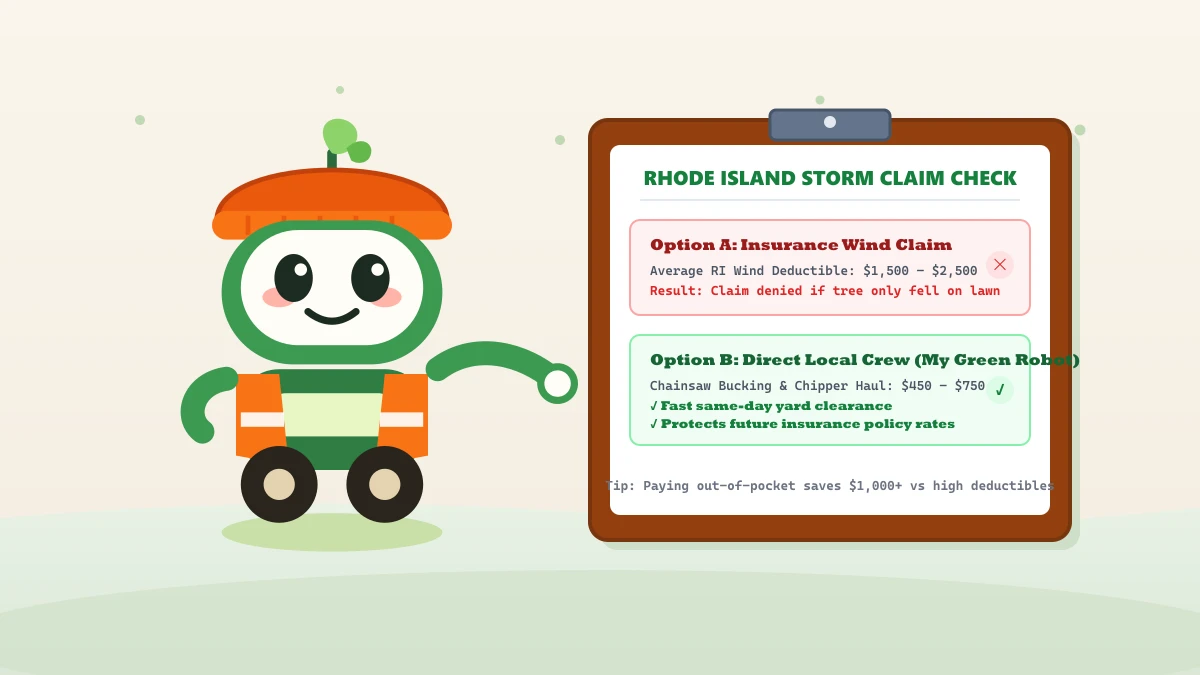
One of the most common surprises for Rhode Island homeowners is finding out that homeowners insurance rarely pays for tree cleanup on open lawn areas.
When Insurance Covers Storm Cleanup:
- A limb falls directly on your house, garage, shed, or structurally damages a fence.
- In these cases, insurance typically covers the structural repair and the cost to crane/lift the tree off the building (often capped at $500 to $1,000 for debris removal).
When Insurance Does NOT Cover Cleanup:
- A 40-foot branch blows down across your lawn, garden, or driveway without damaging a structure. Most New England insurers consider this basic property maintenance.
- The Deductible Reality: In Rhode Island, hurricane and windstorm deductibles typically range from $1,000 to $2,500. If a professional crew can chip and remove the fallen timber for $600 to $800, paying out-of-pocket is far cheaper than filing a claim and facing future premium hikes.
Critical Safety: Overhead Power Lines & Rhode Island Energy
If any fallen limb is in contact with, leaning against, or within 10 feet of an overhead electrical wire, do not touch it or allow anyone near the area:
- Call Rhode Island Energy immediately at 1-855-743-1101 (or 911 if there is active arcing, sparking, or fire).
- Professional landscaping and tree crews are legally prohibited by OSHA regulations from operating chainsaws or chippers near energized lines until certified utility line-clearance arborists de-energize and ground the wire.
- Once Rhode Island Energy cuts the hazardous limb clear of the power lines, local landscape crews can step in to buck, chip, and haul away the remaining timber from your yard at standard rates.
How to Get Fast, Fair Storm Cleanup Quotes in Rhode Island
When a nor'easter knocks out trees across your neighborhood, local phone lines jam and broker platforms like Angi or HomeAdvisor sell homeowner requests to multiple competing companies that call incessantly.
My Green Robot connects you directly with verified local landscape and tree crews already running active wood chippers and dump trailers in your town.
- Tell the robot your town and needs: Describe the size of the fallen limbs, whether your driveway is blocked, or if storm debris requires roof and gutter cleaning.
- Local crews dispatched on active routes: The system matches you with crews already operating nearby in Pawtucket, Providence, Warwick, or Cranston, saving transit time and fuel.
- Transparent written estimates: Review clear, itemized pricing without high-pressure phone pitches or surprise fees.
Need storm yard cleanup in Rhode Island?
Skip the phone tag. Tell the robot your property details, and we'll connect you with vetted local crews equipped with chainsaws and chippers to clear your yard safely.
FAQ
How much does storm cleanup cost for a yard in Rhode Island?
Most Rhode Island homeowners pay between $350 and $850 for typical post-storm yard cleanup involving fallen limbs, heavy brush chipping, and haul-away. Minor debris raking costs $150 to $300, while severe nor'easter damage requiring crane work or clearing a large fallen oak across a driveway ranges from $900 to $2,400.
Does Rhode Island homeowners insurance cover fallen tree branches?
Insurance policies in Rhode Island typically only cover tree removal if the fallen tree or branch damages an insured structure (such as your roof, siding, shed, or fence). If a tree blows down in the middle of your open lawn or driveway without damaging a building, insurance generally considers cleanup an out-of-pocket maintenance expense. Furthermore, standard New England windstorm deductibles range from $1,000 to $2,500.
What should you do if a branch falls on an electric power line?
Never attempt to move or cut branches touching or near overhead utility wires. In Rhode Island, contact Rhode Island Energy immediately at 1-855-743-1101 or report it to local emergency dispatch (911). Tree crews cannot legally work on limbs within 10 feet of energized lines until utility linemen clear the hazard.
Why is storm cleanup more expensive in winter than during autumn?
Winter storms (nor'easters and freezing rain) bring sub-freezing temperatures, frozen wood that dulls chainsaw teeth faster, snowbanks that bury branches, and the closure of municipal curbside yard waste pickup in almost every Rhode Island municipality from December through March (check your town's schedule in our [Rhode Island leaf and yard waste pickup guide](/blog/ri-leaf-yard-waste-pickup-by-town)). Contractors must haul wood debris directly to the Central Landfill in Johnston (RIRRC) or private wood-recycling transfer yards, paying per-ton commercial tipping fees.