
Blog
The Rhode Island Homeowner’s Guide to Tick-Proofing Your Lawn: Woodline Buffers and URI Data (2026)
Rhode Island consistently ranks among the top states in the country for Lyme disease incidence per capita. According to surveillance data published by the Rhode Island Department of Health (RIDOH) and research conducted at the University of Rhode Island (URI) TickEncounter Resource Center in South Kingstown, the vast majority of tick encounters do not happen in deep wilderness—they occur right in residential backyards.
Whether you live in the heavily wooded hill country of Exeter, Richmond, and Hopkinton, or suburban neighborhoods in South Kingstown, Coventry, and Warwick, your lawn perimeter is the primary front line for tick defense.
Fortunately, tick biology makes them predictable. By understanding how blacklegged deer ticks (Ixodes scapularis) move and where they survive, Rhode Island homeowners can dramatically reduce tick encounters without turning their yard into a chemical hazard.
Here is what the latest URI agronomy and entomology research tells us about tick-proofing your Rhode Island lawn in 2026.
1. The 9-Foot Perimeter Rule: Where Ticks Actually Live
A common misconception is that ticks thrive in the middle of a sunny green lawn. In reality, ticks are extremely sensitive to dehydration. They lack the ability to drink standing water and must absorb ambient moisture from the air, requiring relative humidity levels above 85 percent to survive.
Field research from URI reveals a striking distribution pattern in typical New England residential yards:
- Over 80% of ticks are found within the first 9 feet of the wooded perimeter, stone walls, or overgrown brush lines.
- Under 2% of ticks survive in open, sunny lawn areas cut to a regular height.
The damp microclimate created by fallen oak leaves, damp pine needles, and dense ground covers (such as English ivy or pachysandra) provides the exact humidity shield ticks need to wait for a passing host.
2. The URI 3-Foot Landscape Buffer Strategy

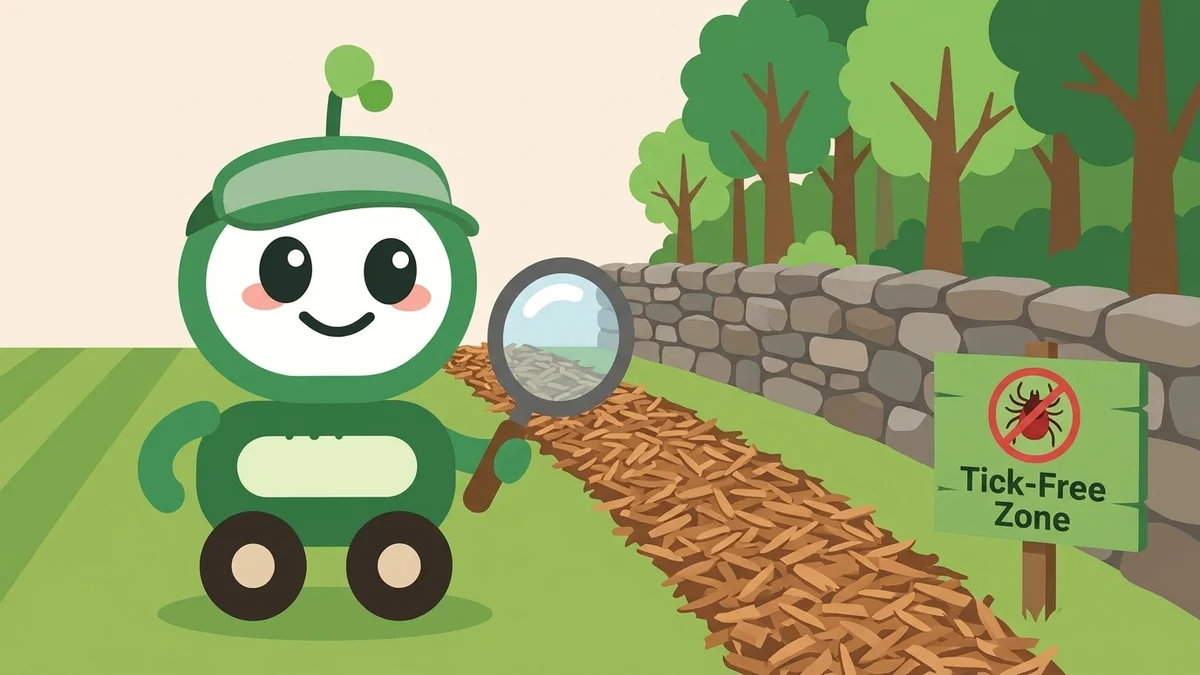
One of the most effective, research-backed physical modifications you can make to your Rhode Island property is installing a 3-foot wide transition barrier along all wooded borders.
How the Buffer Works
Ticks do not jump, fly, or run. They crawl slowly and quest on vegetation. When they encounter hot, dry materials exposed to sunlight, they reverse course or quickly desiccate and die.
- Material: Spread a 3-foot wide strip of clean wood chips, cedar mulch, or crushed stone directly between the woods line and the outer edge of your mowed grass.
- Depth: Maintain a mulch depth of 2 to 3 inches. Cedar mulch offers an added benefit: the natural thujone oils in cedar wood act as a mild natural deterrent.
- Sun Exposure: Ensure the buffer strip receives direct sunlight. Prune back low-hanging tree branches that cast constant deep shade over the transition zone.
This physical boundary accomplishes two things: it stops ticks from crawling onto your lawn turf and serves as a visual reminder for children and pets to stay out of the brush.
3. Leaf Litter & Perimeter Cleanup

In Rhode Island, fall foliage often blows against perimeter stone walls and remains untouched through winter and spring. This thick carpet of decomposing leaves creates an ideal nesting habitat for the white-footed mouse (Peromyscus leucopus), the primary reservoir host that transmits the Lyme bacteria (Borrelia burgdorferi) to larval ticks.
To eliminate this tick haven:
- Rake and remove leaf piles along fences, stone walls, and garden beds before mid-May.
- Clear brush and briars back at least five feet from your lawn perimeter.
- Elevate firewood piles: Stack firewood off the ground on metal racks positioned in sunny areas away from the house and children’s play zones.
If you don't have the time or equipment to haul heavy yard waste, booking a seasonal perimeter yard cleanup clears away these dense breeding zones before tick nymphs emerge.
4. The Critical Rhode Island Tick Calendar
Tick activity in New England follows a distinct seasonal cycle:
| Season | Peak Window | Predominant Tick Stage | Risk Level & Action Required |
|---|---|---|---|
| Spring / Early Summer | May 15 – July 31 | Nymphs (Poppy-seed size) | Highest Risk: Nymphs cause ~70% of Lyme cases. Apply perimeter cedar barriers, install mulch buffers, and keep grass cut to 3.5 inches. |
| Late Summer | August – September | Larvae | Low human infection risk, but active on mice and chipmunks. Keep brush cleared. |
| Fall | October – November | Adult Deer Ticks | Moderate-to-High Risk: Adults quest on tall grass on sunny days above 35°F. Perform thorough fall leaf cleanup. |
| Winter | December – March | Dormant / Intermittent Adults | Low risk, but ticks will quest on warm winter thaws (>40°F). |
5. Yard Zoning for Family Safety
If you have children or pets, organizing your outdoor space into activity zones significantly lowers encounter rates:
- Keep Play Sets in the Sun: Move swing sets, trampolines, sandboxes, and picnic tables at least 10 to 15 feet away from the wooded edge into the center of the sunny lawn.
- Create Hardscape Borders around Patios: Surround outdoor seating with flagstone, gravel, or paver borders rather than planting dense perimeter shrubbery right up to the seating area.
- Maintain Regular Lawn Mowing: Mowing your lawn on a consistent weekly or bi-weekly schedule keeps grass at an optimal 3 to 3.5 inches, maximizing airflow and sunlight penetration so grass blades dry quickly after morning dew.
Keep Your Rhode Island Yard Protected
Protecting your family from ticks does not require drenching your entire property in synthetic chemicals. By creating clear physical borders, clearing shaded leaf litter, and keeping your turf healthy and mowed, you eliminate the microclimates ticks need to survive.
Need help maintaining your lawn borders or scheduling consistent mowing this season? Check your property instantly on My Green Robot to get an exact satellite-measured quote and match with trusted, independent Rhode Island lawn care crews.
FAQ
What is the best landscape barrier to stop ticks from entering a Rhode Island lawn?
The University of Rhode Island (URI) TickEncounter Resource Center and the CDC recommend installing a 3-foot wide physical buffer of wood chips, bark mulch, or crushed gravel between your wooded perimeter and your lawn turf. Ticks avoid crossing sunny, dry wood chips because they quickly dehydrate and perish without ambient moisture.
When are ticks most active in Rhode Island yards?
In Rhode Island, blacklegged (deer) tick nymphs are most active from mid-May through July. Nymphs are tiny (the size of a poppy seed) and cause roughly 70 percent of human Lyme disease transmissions in the state. Adult deer ticks remain active throughout the fall and on any winter day when air temperatures rise above 35 degrees Fahrenheit.
Where do ticks live in a typical Rhode Island suburban backyard?
Over 80 percent of ticks in residential Rhode Island yards inhabit the first 9 feet of the lawn perimeter adjacent to woods, stone walls, and brush borders. They require high relative humidity (above 85 percent) found under damp oak leaf litter, pachysandra ground cover, and dense ornamental shrubs.
Does mowing the lawn short prevent ticks in Rhode Island?
Maintaining turf grass at 3 to 3.5 inches helps ticks desiccate under direct sunlight, but mowing alone will not solve a tick problem if shaded leaf litter and overgrown brush line the property borders. Creating a 3-foot wood chip barrier and moving children's playsets at least 10 feet into the open lawn are essential companion steps.