

Blog
Small Yard, 36-Inch Gate? Why Most Lawn Crews Skip Providence and Pawtucket (2026 Guide)
If you own a home or multi-family property in Providence, Pawtucket, Cranston, or Central Falls, you have probably experienced this frustrating scenario:
You call a landscaping company to get an estimate for regular weekly mowing. The truck pulls up, the driver steps out, glances at your narrow side driveway and your 36-inch chain-link backyard gate, and either quotes an astronomical "push mower fee" ($75 to $90 for a tiny patch of grass) or tells you they only service properties with 48-inch double gates.
In dense Rhode Island neighborhoods—from Federal Hill, Mount Pleasant, and Elmwood to Oak Hill and Woodlawn—compact yards are the standard. Yet the modern commercial landscaping industry has built its entire business model around oversized equipment that simply does not fit urban city life.
Here is why traditional lawn services struggle with urban Rhode Island properties, why giant commercial mowers ruin small lawns anyway, and how to get your compact yard mowed cleanly without contractor hassles.
1. The Equipment Mismatch: 52-Inch Decks vs 36-Inch Gates
Over the last fifteen years, commercial lawn maintenance has shifted toward massive ride-on and stand-on zero-turn mowers. These machines feature cutting decks ranging from 48 to 60 inches wide, designed to mow sprawling suburban acres in Warwick or South Kingstown in under twenty minutes.
However, older New England urban residential lots were built with standard 36-inch pedestrian gates. When latch hardware, fence posts, and self-closing hinges are factored in, the true clear opening is often only 32 to 34 inches.
A 52-inch zero-turn mower cannot fit through a 34-inch gate.
When a high-overhead suburban crew arrives at a Providence triple-decker, their options are limited:
- Unload a 21-inch push mower: Many large crews do not even carry walk-behind mowers on their trailers, or they treat push-mowing as an expensive penalty service.
- Weed-whack the entire backyard: Some crews attempt to cut the entire back lawn with a string trimmer. This leaves scalped patches, uneven grass heights, and torn turf blades that turn brown in the summer sun.
- Walk away from the job: Because they can earn $70 mowing a flat half-acre in East Greenwich in 18 minutes, they decline small urban jobs entirely.
2. Soil Compaction: Heavy Mowers Destroy Small Urban Lawns
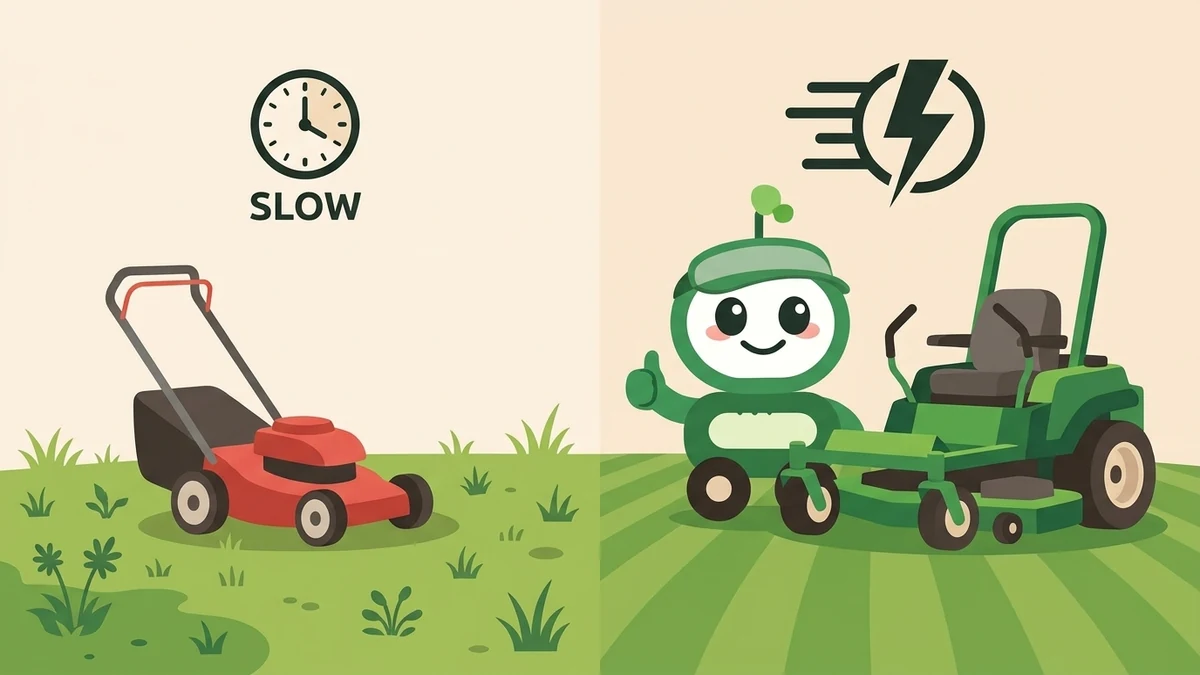
Even if a commercial riding mower could squeeze past your porch steps, you would not want it on a small city lawn.
A commercial stand-on zero-turn mower weighs between 800 and 1,400 pounds before adding the operator's weight. On a sprawling suburban property, that weight is distributed across wide turns. But on a compact 2,500 square foot backyard, the mower must execute tight zero-radius pivot turns every 12 to 15 feet.
In Rhode Island, where urban soils often have high clay content and frequent spring precipitation, heavy equipment causes three immediate problems:
- Severe Soil Compaction: The heavy tires compress the top six inches of topsoil, eliminating oxygen pockets and preventing grass roots from absorbing water and nutrients.
- Tire Rutting along Fence Lines: Tight pivot points tear out grass roots at the borders, creating bare dirt paths that quickly fill with crabgrass and dandelions.
- Surface Scalping: Small urban yards frequently feature grade changes, tree root mounds, and walkway borders. Wide mower decks scalp high spots and shave turf down to bare soil.
Compact properties require lightweight commercial walk-behind mowers (21 to 30 inches) that deliver a manicured finish without compacting city topsoil.
3. Street Parking, Trailers, and City Regulations
Operating a commercial lawn business in downtown Providence or Pawtucket presents logistical challenges that suburban crews prefer to avoid:
- Narrow One-Way Streets: Maneuvering a heavy-duty pickup truck towing a 16-foot tandem-axle trailer down narrow residential streets (such as those in Federal Hill or the East Side) is difficult and frequently blocks traffic.
- Street Sweeping & Parking Citations: City parking regulations restrict commercial trailers during scheduled street cleaning days, creating timing headaches for rigid route schedules.
- Overhead Lines and Narrow Driveways: Shared driveways between adjacent triple-deckers leave zero room to park commercial rigs without blocking tenants from leaving for work.
Urban-focused lawn crews rely on nimble setups with compact walk-behind equipment that can park curbside legally, complete the service quickly, and keep your property looking sharp.
4. Fair Pricing for Compact City Turf
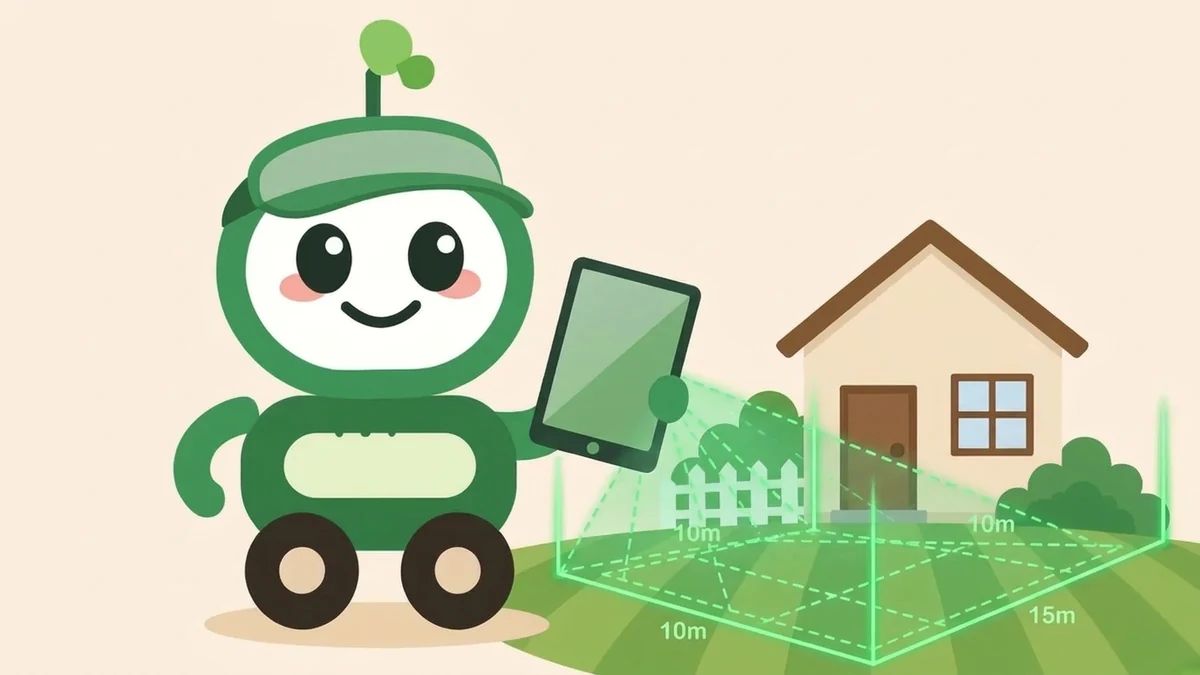
At My Green Robot, we believe homeowners with compact city yards shouldn't be penalized just because their lot has a 36-inch gate.
Our platform uses high-resolution satellite mapping to isolate your actual grass footprint, subtracting your roof, paved driveway, patio, and garage. If your backyard is 2,400 square feet, you are priced strictly for 2,400 square feet—not an arbitrary minimum quote inflated because a contractor had to push a mower.
Whether you live in Providence, Pawtucket, Cranston, or Central Falls, you can match with local independent pros who carry the right equipment for city lots.
5. How to Measure Your Urban Yard in 30 Seconds
- Enter your Rhode Island street address on our instant quote estimator.
- The satellite tool calculates your true mowable square footage.
- Choose your preferred schedule—Weekly, Bi-weekly, or a One-time cleanup.
- We match you with vetted local lawn specialists equipped with commercial walk-behind mowers that pass through narrow gates without damaging your turf or fences.
FAQ
Why do commercial landscapers refuse to mow small yards with narrow gates in Providence?
Most commercial landscape operations invest in 48-inch, 52-inch, or 60-inch commercial zero-turn mowers. These machines cannot physically fit through standard 36-inch residential pedestrian gates. Crews that operate on tight 15-minute schedules often decline urban properties rather than unload smaller push mowers.
Does a 1,200-pound riding mower damage small urban lawns in Rhode Island?
Yes. Heavy commercial zero-turn mowers weigh between 800 and 1,400 pounds. On compact 2,000 to 4,000 square foot urban lots with typical Rhode Island clay-loam soils, repeated turns crush turf root systems, cause deep soil compaction, and leave muddy ruts along fence lines after New England rainstorms.
What size mower fits through a standard Rhode Island backyard fence gate?
Standard residential walk-behind gates on chain-link, vinyl, or wood fences measure 36 inches wide, with some older city homes having clear openings as narrow as 32 to 34 inches due to post hinge overhangs. Commercial 21-inch and 30-inch walk-behind mowers fit through these gates with zero risk of fence damage.
How much does it cost to mow a small urban lawn in Providence or Pawtucket?
A typical compact city lawn under 4,000 square feet in Providence, Pawtucket, or Central Falls costs between $35 and $50 per regular cut. My Green Robot measures your mowable turf via satellite to provide an exact price without push mower penalty surcharges.