
Blog
Why Lawn Care Pros Are Replacing Angi With All-in-One Business Software (The Math Behind $0 Lead Fees)
Every independent lawn care operator knows the sound: you are midway through mowing a 10,000-square-foot lawn in Warwick or Cranston, the machine engine is roaring, and your phone starts buzzing in your pocket.
It is an alert from Angi or Thumbtack. A homeowner in your area requested a quote for weekly mowing.
Contractors on industry forums talk constantly about the "five-minute window." If you don't call the lead back within five minutes, your chance of closing drops below 10%. But when you are holding a weed trimmer or steering a commercial zero-turn mower with hearing protection on, picking up the phone within two minutes means shutting down equipment, pulling off work gloves, and climbing into the truck cab.
By the time you return the call, three other contractors have already called, and the lead goes straight to voicemail. That $55 charge hits your credit card statement regardless.
For years, lead directories convinced small lawn and landscape businesses that paying for shared leads was the only reliable way to fill a route. In 2026, independent operators across Rhode Island are stepping away from that treadmill.
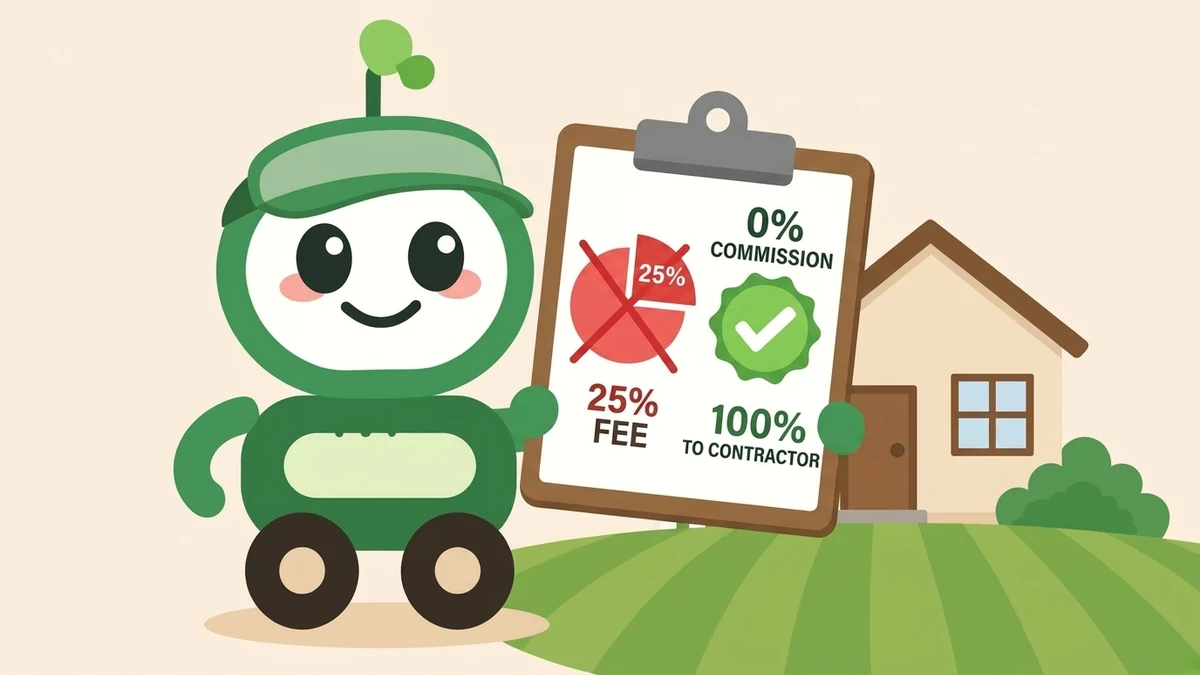
Instead of paying $60 per shared phone number, small 1-to-3 person crews are switching to all-in-one contractor business software that bundles route clustering, dispatch, and 24/7 AI call answering with $0 lead fees and 0% commission.
The Real Math: Shared Leads vs. All-in-One Business Software
To understand why contractors are walking away from shared-lead directories, examine the actual Customer Acquisition Cost (CAC) across an average 28-week Rhode Island mowing season.
The Shared Lead Trap (Angi / Thumbtack / HomeAdvisor)
- Average cost per shared lead: $50 to $75.
- Lead distribution: Sold simultaneously to 4 or 5 contractors.
- Realistic close rate on shared leads: 20% (you win roughly 1 out of every 5 leads you pay for).
- Actual cost to land 1 weekly customer: $55 × 5 leads = $275 cash spent upfront.
- Gross season value of a weekly mow ($50/cut × 28 cuts): $1,400.
- The lead fee deduction: You give up 19.6% of your gross season income on that yard before paying a single dollar for fuel, two-stroke oil, blade sharpening, or equipment payments.
Even worse, lead aggregators frequently deliver "tire kickers" asking for a single $30 lawn cut, or property owners located 25 miles outside your daily territory. Disputing these charges takes hours of support tickets and phone calls.
The Problem With Traditional CRMs (Jobber & Yardbook)
Many operators try leaving Angi by purchasing field management apps like Jobber or Yardbook. While these apps offer solid calendars and invoice templates, they have one major limitation: they bring zero customer leads to your truck.
You pay $50 to $150 every month for software, but your schedule remains empty unless you spend extra money printing flyers, running Facebook ads, or buying directory leads anyway.
The All-in-One Contractor Software Model
- Lead fee: $0 per lead (homeowner requests from active neighborhood routes arrive directly at your desk).
- Commission: 0%.
- Software cost: $49 to $99 / month flat subscription.
- Cash spent to acquire each recurring yard: $0 in lead fees.
- Annual savings per truck: $4,200 to $7,800.
| Comparison Metric | Angi / Thumbtack Directory | Standard Field App (Jobber/Yardbook) | Modern Contractor Business Software |
|---|---|---|---|
| Cost Per Lead | $45 to $85 | No leads provided ($0) | $0 (Included in platform) |
| Lead Exclusivity | Sold to 3–5 competitors | N/A | 100% Direct to your crew |
| Commission on Jobs | 0% to 15% | 0% | 0% Commission |
| Phone Answering | Missed while mowing | No call answering | 24/7 AI Phone Receptionist |
| Quoting Method | Drive across town for estimate | Manual quote entry | Instant satellite square footage |
| Route Density | Scattered jobs across county | Manual map grouping | Automated street clustering |
| Annual Lead Expense | $4,800 – $9,600 | $0 (requires outside ads) | $0 Lead Fees |
The Workflow Trap: Where Small Crews Lose Billable Time
The direct dollar cost of shared leads is only part of the damage. The bigger drain on small lawn businesses is unbillable windshield time.
| Workflow Stage | Traditional Shared Lead Meat Grinder (Angi / Thumbtack) | Modern Contractor Software Workflow |
|---|---|---|
| 1. Homeowner Inquiry | Homeowner fills out an inquiry form online | Homeowner requests yard service online or calls local line |
| 2. Lead Distribution | Contact sold simultaneously to 4 or 5 contractors at $55 each | Satellite tool confirms net turf sq ft; routed to nearest route pro |
| 3. The Call Race | Contractors race to call; winning chance drops after 5 minutes | 24/7 AI answers immediately, captures job scope, and books visit |
| 4. In the Field | Driving 35 minutes for unpaid estimate (customer not home) | Firm estimate sent from the truck cab in 60 seconds with $0 lead fee |
| 5. Business Result | 4 out of 5 pros forfeit $55; winner often underbids below cost | 100% of revenue kept by the crew with dense neighborhood clustering |
When you purchase shared leads, you are constantly pushed into price competition against uninsured weekend hobbyists who bid below cost. When you operate through dedicated contractor software like the Contractor Command Desk, homeowners see transparent yard price guidance before you ever visit the property.
3 Core Capabilities That Let a 2-Person Crew Run Like a 10-Truck Fleet
Contractors who replace third-party directories with integrated business software rely on three specific capabilities to scale without adding office overhead.
1. 24/7 AI Phone Dispatch (Never Miss a Job While Mowing)

Answering customer calls from the seat of a commercial mower or while running a leaf blower is noisy, unsafe, and frustrating for the caller. Yet home service statistics consistently show that over 75% of homeowners hire the first business that gives them a professional response.
Modern contractor software includes an integrated 24/7 AI phone answering service on a dedicated local line (like (844) 847-3265). When a homeowner calls:
- The AI voice assistant answers on the first ring with clear, friendly speech.
- It collects the customer's full name, street address, and specific service needs (mowing, spring cleanup, aeration, mulch).
- It confirms whether the home sits within your active service area across Rhode Island towns.
- A complete job summary is delivered to your phone and contractor dashboard.
You keep cutting grass, and the caller gets immediate attention instead of dialing the next company on Google.
2. Satellite Lot Sizing (Send Locked Quotes in 60 Seconds)
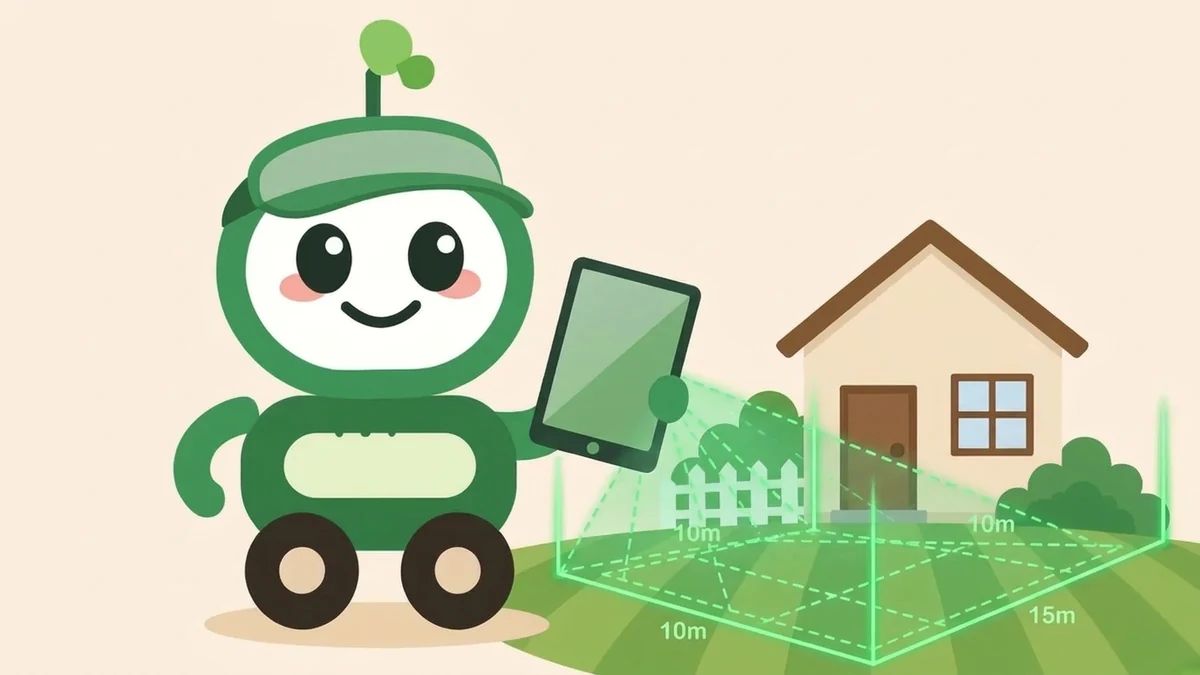
Driving 25 minutes across town to measure a lawn in Pawtucket or Johnston only to have the homeowner say "let me think about it" burns daylight and diesel.
With built-in satellite measurement:
- High-resolution aerial imagery pulls up the property boundaries instantly.
- The software calculates net turf square footage, driveway dimensions, and fence lines.
- Your standard pricing rules ($45 for up to 5,000 sq ft, $65 for 10,000 sq ft) apply automatically.
- You send a firm, professional estimate from your phone before leaving your current job site.
3. Route Clustering (Dense Neighborhoods Over Distant Towns)
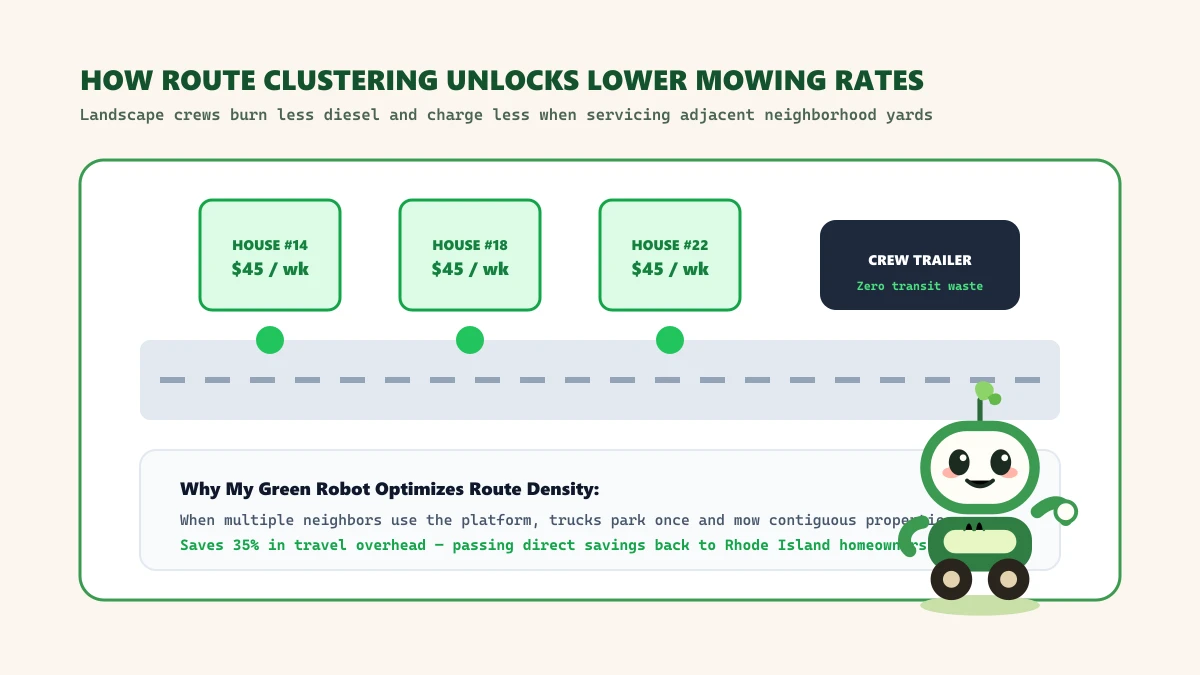
A contractor with 30 customers spread across four towns spends $160 or more each week on fuel and loses 10 to 12 hours sitting in traffic. A contractor with 30 customers grouped into two compact neighborhood clusters finishes work by early afternoon and cuts fuel consumption in half.
Modern contractor software groups incoming homeowner requests by geographic density. When you secure a customer on Benefit Street or East Avenue, adjacent neighbors searching for service are directed to your schedule first.
- Single trailer unloads: Unload the equipment once and mow three contiguous properties.
- Reduced equipment wear: Machines spend their operating hours cutting turf rather than idling on an open trailer.
- Higher billable ratio: Billable working time rises from 55% of the workday to over 85%.
How to Switch in 24 Hours
Transitioning your landscape or mowing business away from shared lead directories is straightforward:

- Verify Your Public Listing: Check the Rhode Island registry on the Contractor Desk to claim your business profile.
- Choose Your Service Towns: Select the specific towns where you want your routes to grow and mark your core services (mowing, cleanups, mulch, tree care).
- Receive Direct Route Requests: As homeowners in your chosen towns request estimates through My Green Robot, review and accept quotes directly with zero lead fees.
- Run Your Operation From the Platform: Use the Contractor Software Platform for payment processing, satellite property measurements, and automated phone dispatch.
Eliminate middleman fees, build tighter routes, and let modern software manage your dispatch so you can focus on running your crew.
FAQ
Why are independent lawn care contractors leaving Angi and Thumbtack?
Contractors are leaving because shared-lead platforms charge between $45 and $85 per lead while selling that exact same contact to four or five competing companies. A crew often spends $300 to $500 a week on homeowners who never answer the phone or hire the first person who calls within 30 seconds.
How is contractor software different from tools like Jobber or Yardbook?
Jobber and Yardbook provide calendar and invoice tools, but they bring zero customer leads to your schedule. You still have to spend thousands on advertising. All-in-one contractor software combines route management with included neighborhood homeowner leads at zero per-lead fees and zero commission.
How does 24/7 AI phone answering help a lawn care crew?
When a contractor is operating a zero-turn mower or string trimmer, they cannot safely answer incoming customer calls. The AI voice agent answers on a local phone line, identifies the service needed, captures the address, and schedules the estimate directly in the contractor desk.
What is route clustering and why does it save money?
Route clustering groups customer yards on the same street or subdivision. Mowing four yards on one street saves 1.5 to 2 hours of windshield time and $25 in fuel every day compared to driving between distant towns.