Lawn lime application in Rhode Island: soil acidity, pH, and costs
Why Rhode Island soil is naturally acidic, how calcitic lime unlocks locked fertilizer, application rates per 1,000 sq ft, and late fall vs spring timing.

If your lawn in Rhode Island looks yellow, thin, and overrun by moss no matter how much expensive fertilizer you apply, the problem is soil acidity. A proper lawn lime application in Rhode Island is the single most cost-effective way to restore balanced soil chemistry and unlock fertilizer for your grass.
Why Rhode Island Soils Are Naturally Acidic
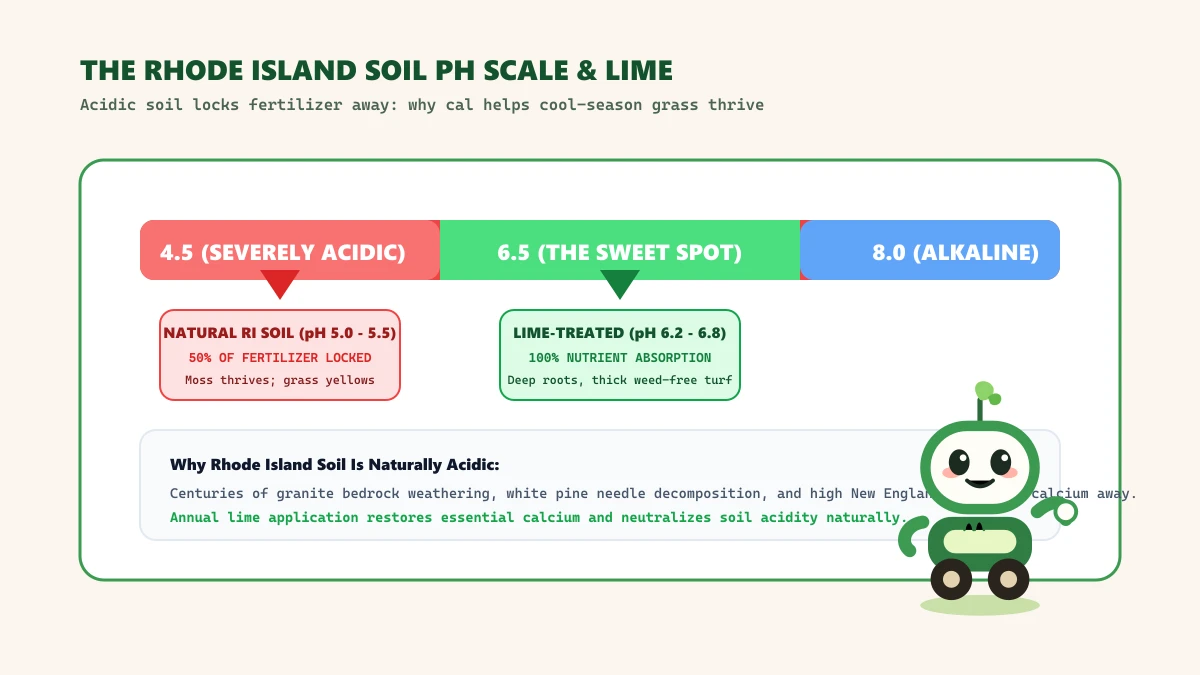
Rhode Island's geological foundation consists of granite bedrock, glacial gravel, and acidic podzol soils. Decades of heavy New England rainfall and decaying white pine and oak needles leach calcium and magnesium ions out of the topsoil, replacing them with acidic hydrogen and aluminum ions.
Unamended Rhode Island residential lawns typically register a soil pH between **5.0 and 5.5**. Cool-season grasses like Kentucky bluegrass and turf-type tall fescue require a neutral-to-slightly-acidic pH between **6.2 and 6.8** to thrive.
The Locked Fertilizer Penalty: Why Acidic Soil Wastes Money
When soil drops below pH 6.0, an invisible chemical lock occurs:
• At pH 5.0, **over 53% of applied nitrogen, phosphorus, and potassium is locked away** in insoluble chemical bonds that plant roots cannot take up.
• High soil acidity stunts beneficial soil bacteria and earthworms, allowing acid-loving invaders like broadleaf weeds and spongy green moss to crowd out desirable turfgrass.
Spreading lime does not directly fertilize grass; it neutralizes soil acids, enabling your lawn to actually use the fertilizer you already paid for.
Calcitic vs. Dolomitic Lime: Which Does Your Yard Need?
Homeowners in Rhode Island will encounter two primary types of lime at local garden centers and landscape suppliers:
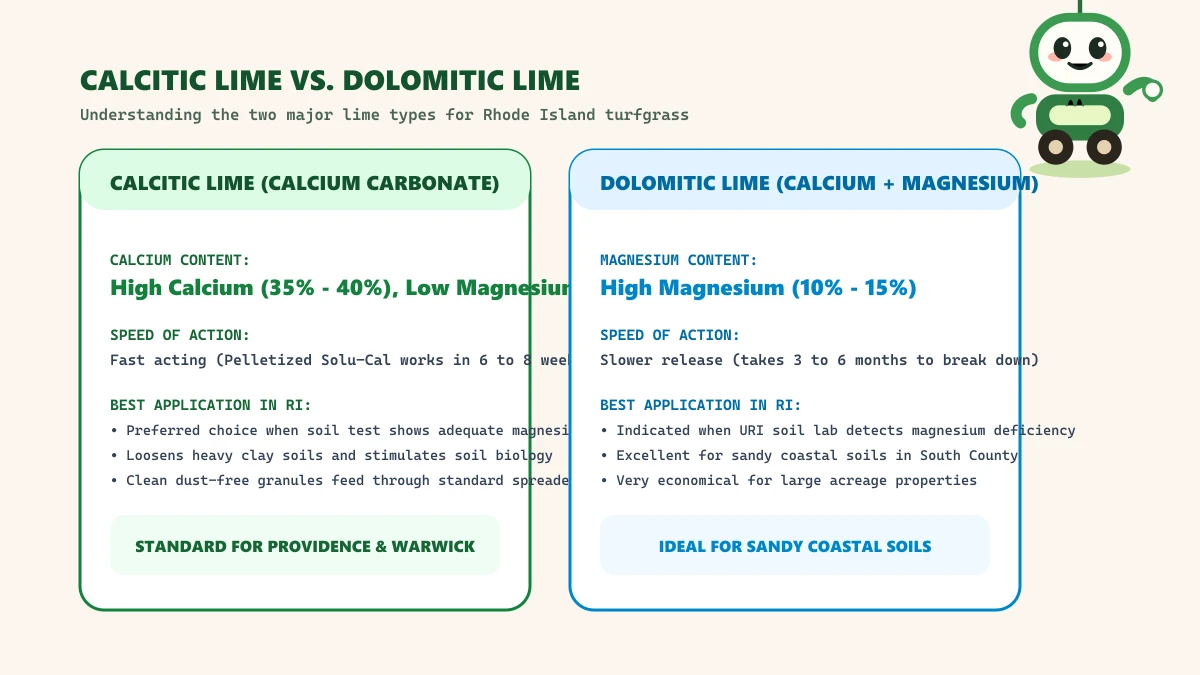
1. **Calcitic Lime (Calcium Carbonate):** Contains 35% to 40% calcium and very little magnesium. Modern enhanced calcitic lime (such as Solu-Cal) is ground ultra-fine and pelletized, neutralizing soil acidity within **6 to 8 weeks** instead of waiting a full year.
2. **Dolomitic Lime (Calcium Magnesium Carbonate):** Contains 10% to 15% magnesium in addition to calcium. Recommended when a University of Rhode Island (URI) soil test indicates a magnesium deficiency, particularly in sandy coastal soils across Narragansett, Westerly, and South County.
Unless a soil lab test shows low magnesium, most Rhode Island lawn care crews recommend **pelletized calcitic lime** because it dissolves cleanly, works faster, and does not harden clay soil.
Application Rates and the Power of Late Fall Timing
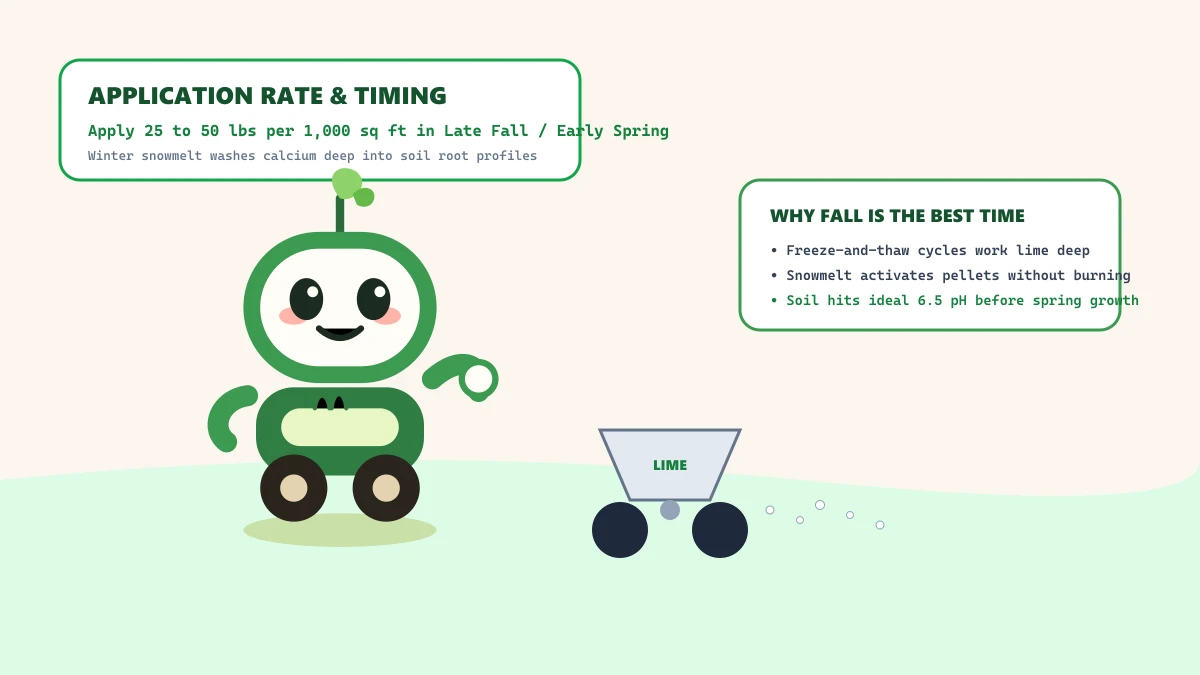
The standard maintenance application rate in Rhode Island is **25 to 50 pounds of pelletized lime per 1,000 square feet** once per year.
If a soil test reveals severe acidity (pH under 5.0), your yard may require 75 to 100 pounds per 1,000 sq ft. However, agronomists advise splitting heavy doses into two separate applications spaced six months apart to avoid shocking the turf.
**Why Late Fall Is the Ideal Window:** Applying lime in October or November is ideal in New England. Repeated freeze-and-thaw cycles open cracks in the ground, and melting winter snow naturally washes the calcium carbonate deep into the root zone without any risk of scorching grass blades in summer heat.
Steps: lawn lime application in Rhode Island
- Conduct a simple soil test. Collect six 4-inch core samples from across your yard and test the composite pH using a digital meter or the URI soil lab.
- Choose dust-free pelletized lime. Avoid powdered agricultural lime that blows away in the wind; pelletized calcitic granules flow evenly through rotary spreaders.
- Apply before rain or snow. Spread 25 to 50 lbs per 1,000 square feet just ahead of a steady New England rain or winter snowstorm to activate the pellets.
- Repeat annually until pH stabilizes. Monitor soil every 12 to 18 months until your lawn consistently registers between pH 6.2 and 6.8.
Yard jobs this guide covers
Fall Cleanup
Leaf removal, bed cutback and a final cut before winter. Best time to book: March for spring cleanup and early October for fall cleanup.
Spring Cleanup
Clearing winter debris, cutting back beds and a first mow. Best time to book: March for spring cleanup and early October for fall cleanup.
Lawn Mowing
Weekly or every-other-week cuts, trimming and blowing off walks and driveways. Best time to book: early spring for a full-season mowing or treatment plan.
Around Rhode Island
East Greenwich: East Greenwich has a historic downtown, harbor homes and larger lots to the west, where full-service landscaping is common.
Narragansett: Narragansett is a beach town where many homes are seasonal rentals, so spring openings and fall closings drive the calendar.
Burrillville: Burrillville is wooded and rural in the northwest corner of the state, with big lots, long driveways and heavy snow some winters.
Questions people ask
Can you apply lime and fertilizer at the same time in Rhode Island?
Yes, if you use modern pelletized calcitic lime. However, avoid applying raw unpelletized lime alongside high-ammonia nitrogen fertilizers, as the reaction can convert nitrogen into ammonia gas and burn turf.
How much does professional lime application cost in Rhode Island?
Most local Rhode Island landscape crews charge between $65 and $120 for an annual lime application on a typical quarter-acre suburban yard, often discounted when bundled with fall aeration or cleanup.
Will lime kill the moss growing in my Rhode Island lawn?
Lime does not kill moss directly, but it raises soil pH and unlocks calcium, giving turfgrass the competitive edge needed to outgrow and choke out shade moss over time.
Is pelletized calcitic lime safe for dogs and children?
Yes. High-quality pelletized lime is made from natural crushed limestone. Once watered in with 0.5 inches of rain, children and pets can play safely on the lawn.