Snow plowing trigger depth in Rhode Island: contract rules
How Rhode Island snow plowing trigger depths work: 2-inch vs 4-inch rules, per-push billing vs seasonal rates, salting, and driveway apron windrows.

The biggest friction point in New England winter property maintenance happens around trigger depth. Homeowners call their plow driver asking why they have not arrived after 3 inches of snow, or complain about receiving a per-push bill after a minor dusting. Understanding snow plowing trigger depth in Rhode Island is essential: this predetermined snowfall threshold (typically 2 inches or 4 inches) authorizes a crew to drop their plow blade on your driveway. Here is how trigger depths work, how to compare 2-inch vs 4-inch rules, what happens with town plow windrows, and how to structure your winter contract.

What is a snow plowing trigger depth?
A trigger depth is the contractually agreed accumulation of snow that automatically dispatches your contractor without requiring you to call. If your agreement specifies a 2-inch trigger, your driver will automatically service your driveway once 2 inches of snow have fallen on your paved surface.
Crucially, trigger depth also prevents unwarranted billing. If a minor squall deposits only 1 inch of fluffy snow that will melt by noon, a 2-inch contract protects you from paying an unnecessary per-push invoice.
2-inch vs 4-inch trigger depths: pros, cons, and costs
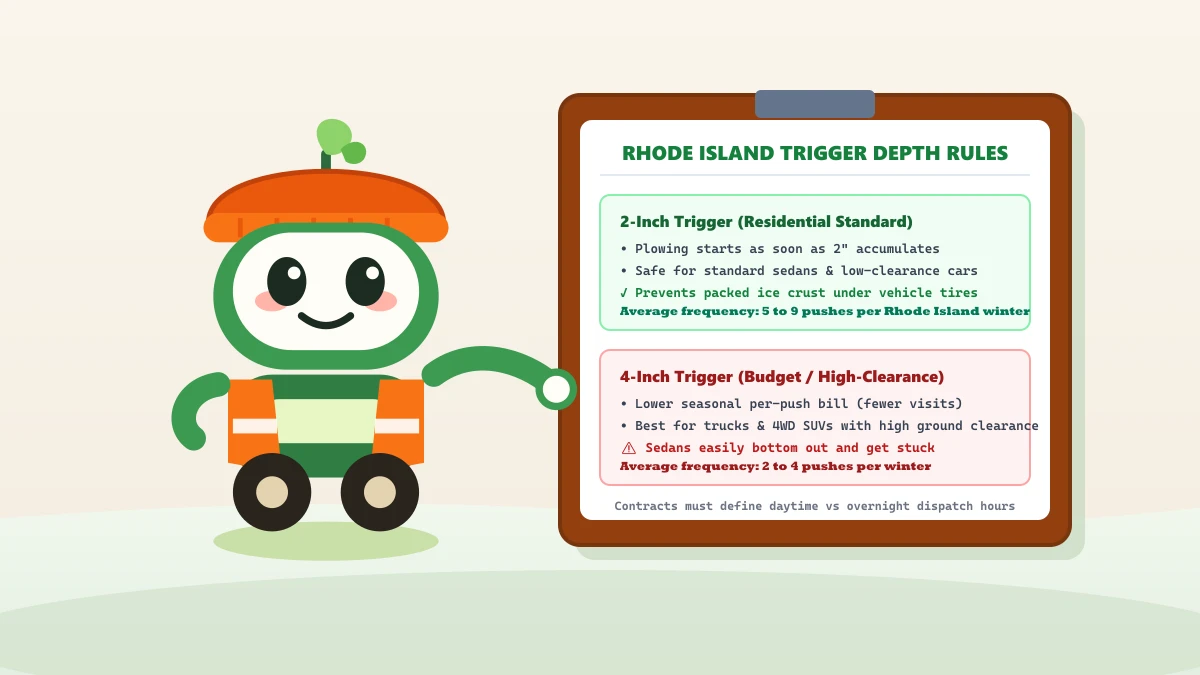
A 2-inch trigger is the standard for most Rhode Island residential driveways. Standard passenger sedans, hybrids, and electric vehicles have 4 to 6 inches of ground clearance. If you wait for 4 inches of snow, vehicles driving in and out compress the powder into a hardened ice crust that plows cannot scrape clean, creating dangerous ruts that persist all winter.
A 4-inch trigger is typically reserved for commercial parking lots or homeowners with high-clearance 4WD pickup trucks and SUVs who want to minimize per-push invoices. In an average Rhode Island winter with 6 to 9 measurable snow events, a 4-inch trigger reduces plow visits by 35% to 50%, but significantly increases the risk of cars bottoming out.
The driveway apron windrow: who clears the street plow ridge?

Every Rhode Island homeowner knows the sinking feeling of having their driveway cleanly plowed at 6:00 a.m., only for the municipal town plow (Providence, Warwick, Cranston, or RIDOT) to rumble past at 6:30 a.m. and deposit a 2-foot wall of heavy, wet, packed street slush across the driveway entrance.
This ice wall is known as the plow windrow or apron berm. Clear contracts state whether the contractor includes a complimentary return visit to clear the municipal windrow, or whether return apron passes incur an additional $20 to $35 return-trip charge. Always verify this clause before the first nor'easter.
Per-push vs seasonal flat rate billing in Rhode Island
Rhode Island contractors typically offer two billing structures based on trigger depth. Under per-push billing, you pay between $45 and $85 per driveway visit every time snowfall exceeds your trigger depth. In prolonged blizzards exceeding 10 inches, contracts specify whether a second pass is billed as an additional push.
Under a seasonal flat rate (typically $450 to $900 from December 1 to April 1), you pay a fixed monthly or upfront price regardless of whether Rhode Island experiences 3 blizzards or 10 snowstorms. For homeowners who rely on punctuality for daily commutes, seasonal contracts guarantee route priority.
Rock salt vs calcium chloride: protecting concrete and pets
Plowing removes bulk snow, but anti-icing treatments determine whether your walkway remains a skating rink. Standard rock salt (sodium chloride) loses effectiveness below 20 degrees Fahrenheit and causes surface scaling on newer concrete driveways.
Quality Rhode Island contractors offer calcium chloride or magnesium chloride blends that melt ice down to minus 15 degrees Fahrenheit and are significantly gentler on stone pavers, concrete, and pet paws. Expect to pay $15 to $35 per application for driveway and walkway de-icing.
Steps: snow plowing trigger depth in Rhode Island
- Confirm your ground clearance needs. Choose a 2-inch trigger for sedans and daily commuters, or 4-inch for high-clearance 4WD vehicles.
- Check the town plow windrow clause. Ensure your agreement clarifies whether the contractor returns to clear street slush berms.
- Select de-icing and salting options. Specify calcium chloride if you have stamped concrete, bluestone walkways, or pets.
- Lock in route density before storms hit. My Green Robot pairs your home with crews already plowing neighboring driveways on your street.
Yard jobs this guide covers
Snow Removal
Plowing driveways and clearing snow after each storm. Best time to book: September or October, before crews fill their routes.
Driveway Salting
Salt or ice melt on driveways to stop slips. Best time to book: September or October, before crews fill their routes.
Walkway Shovel
Hand shoveling walks, steps and entries. Best time to book: September or October, before crews fill their routes.
Around Rhode Island
East Greenwich: East Greenwich has a historic downtown, harbor homes and larger lots to the west, where full-service landscaping is common.
Narragansett: Narragansett is a beach town where many homes are seasonal rentals, so spring openings and fall closings drive the calendar.
Burrillville: Burrillville is wooded and rural in the northwest corner of the state, with big lots, long driveways and heavy snow some winters.
Questions people ask
What is the most common snow plow trigger in Rhode Island?
Two inches is the standard residential trigger depth across Rhode Island, ensuring cars do not compact snow into ice.
What happens if it snows less than the trigger depth?
If snowfall remains below your contract trigger depth (for example, 1.5 inches under a 2-inch contract), the contractor will not plow and you will not be billed.
Do contractors plow multiple times in a single blizzard?
Yes. In heavy nor'easters producing 12 to 24 inches of snow, contractors make multiple passes (often once every 6 to 8 inches) to prevent equipment from getting bogged down.
Does the contractor shovel the front walkway and steps?
Walkway and step shoveling is usually an add-on service ($20 to $40 per visit) because truck plow blades cannot access pedestrian paths.