Weekly vs bi-weekly mowing in Rhode Island: cost comparison
Why bi-weekly lawn mowing in Rhode Island often costs more than weekly service: May growth surges, double-cut fees, the 1/3 mowing rule, and route density discounts.

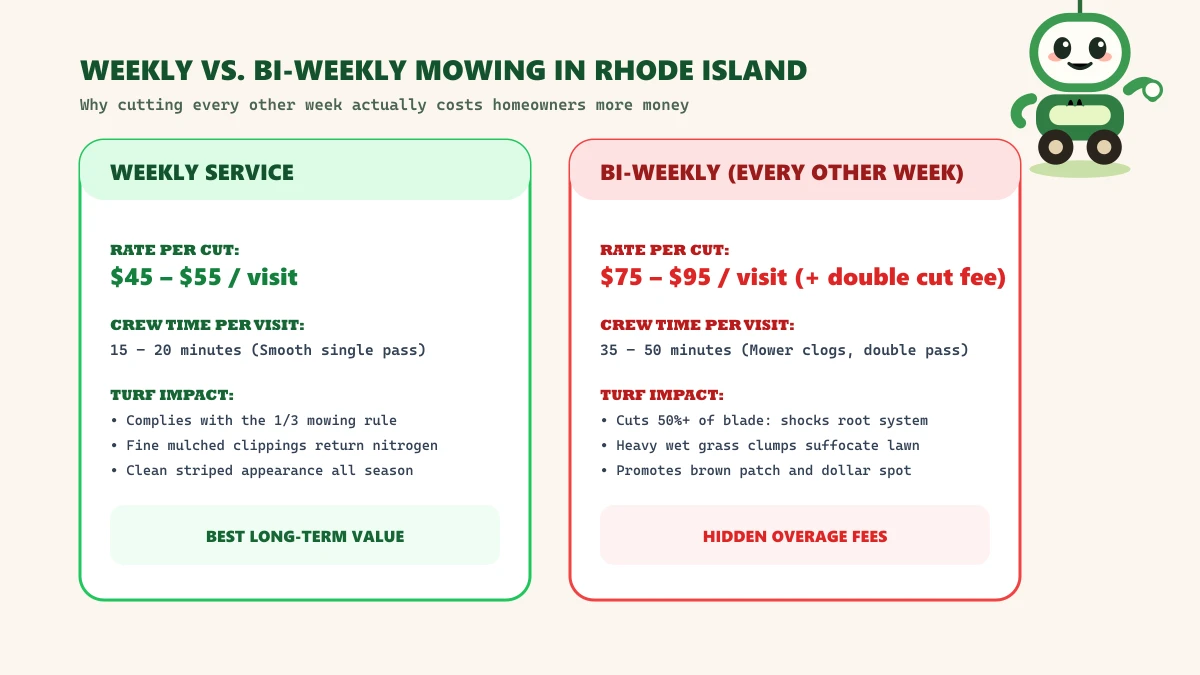
When hiring a lawn care company in Rhode Island, nearly 60% of new homeowners ask: 'Can you just come every other week to save money?' While it seems logical that cutting your visit count in half cuts your bill in half, in practice weekly vs bi-weekly mowing in Rhode Island shows that every-other-week service often costs equal to or more than a standard weekly maintenance plan.
The Rhode Island Spring Growth Surge
Rhode Island lawns consist primarily of cool-season turfgrass varieties: Kentucky bluegrass, perennial ryegrass, and turf-type tall fescue. These species experience their most aggressive vertical growth when soil temperatures sit between 55°F and 68°F accompanied by frequent Atlantic spring rain.
During May and June across Providence, Warwick, and Cranston, healthy lawns can grow between 3 and 5 inches in just seven days. If a yard is left untouched for 14 days, the grass reaches 8 to 10 inches tall. Commercial mowers cannot cleanly cut 10-inch wet grass in a single pass without choking mower decks and overheating hydrostatic drive belts.
The Science: The Critical 'One-Third' Mowing Rule
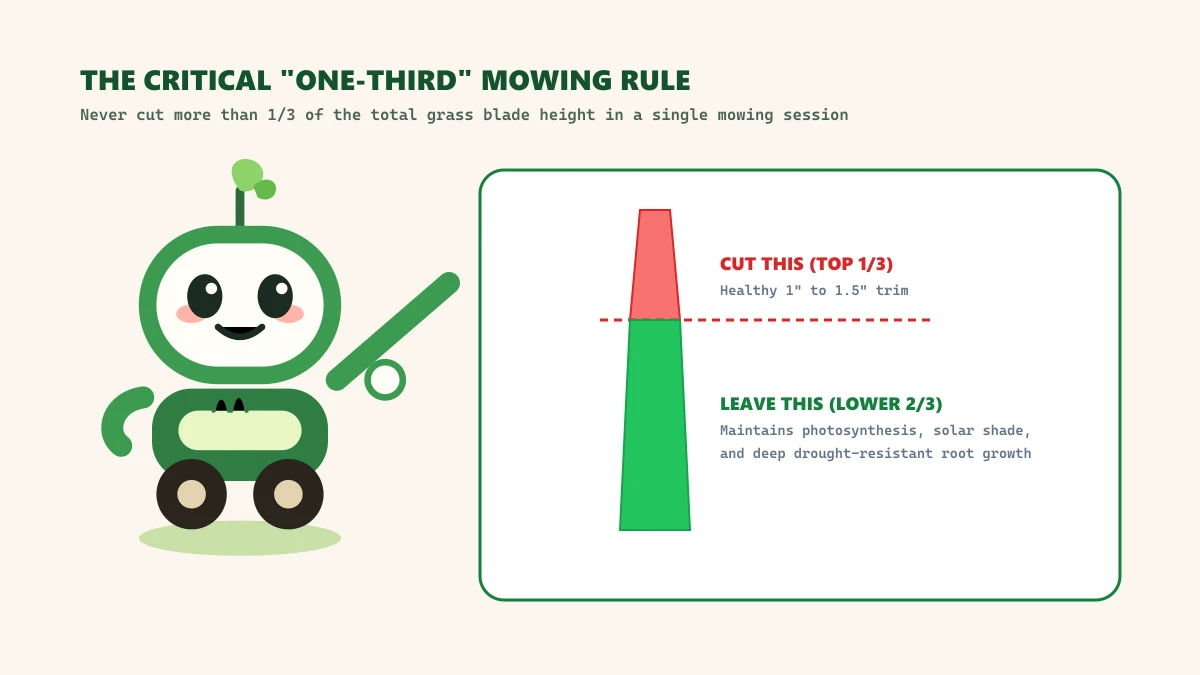
Agronomists at the University of Rhode Island (URI) Turfgrass Program emphasize the foundational 'One-Third Rule' of lawn care: never remove more than one-third of the total grass blade height in a single cutting.
When a crew cuts off more than 33% of the blade at once:
1. **Root growth halts:** The plant enters immediate shock and diverts all carbohydrate reserves away from root development to regrow severed leaf tissue.
2. **Scalping exposes soil to weeds:** Tightly cut canopy crowns allow direct sunlight to hit the soil bed, triggering dormant crabgrass and broadleaf weed seeds.
3. **Fungal vulnerability increases:** Large ragged cuts lose moisture rapidly and provide open wounds for Rhode Island summer pathogens like dollar spot and brown patch.
Why Landscape Crews Charge Extra for Bi-Weekly Visits
Homeowners assume a bi-weekly visit should cost the exact same per-cut rate as a weekly visit ($45 to $55). However, most Rhode Island landscaping contractors charge $75 to $95 per cut for bi-weekly service, or attach mandatory 'overgrown grass surcharges' ($25 to $40) during peak spring.
The reasons are purely economic and mechanical:
• **Double-cutting requirement:** To avoid leaving unsightly, suffocating windrows of wet green clippings across your lawn, the crew must mow the entire property twice—first at the highest deck setting to knock down height, then a second pass at finished height.
• **Bagging and disposal fees:** Thick overgrown grass often cannot be mulched. If the crew is forced to bag bushels of wet clippings, commercial dumping fees at RIRRC Johnston or local transfer stations add direct out-of-pocket overhead.
• **Excessive equipment wear:** Cutting dense, foot-tall grass burns twice as much fuel, dulls $60 commercial mower blades in a single morning, and strains commercial zero-turn engines.
How Neighborhood Route Density Saves Money
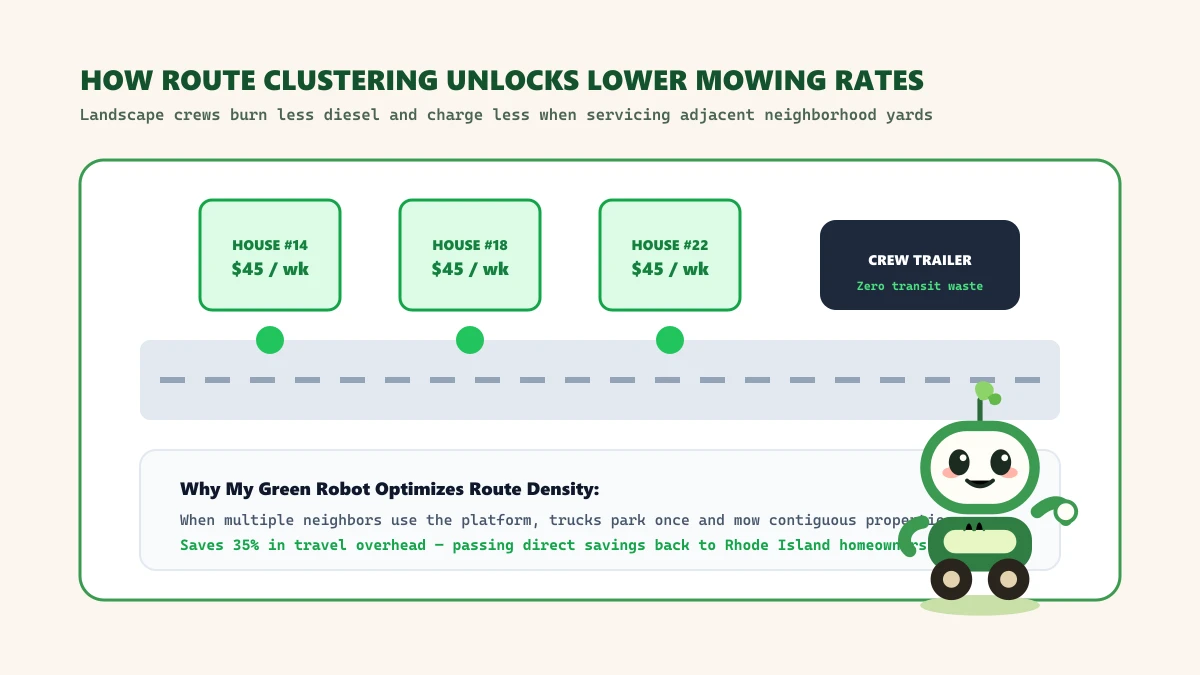
The biggest hidden factor in lawn mowing pricing is windshield time. A landscaping crew with a heavy three-quarter-ton truck and a 16-foot enclosed trailer burns significant diesel and labor sitting in traffic along I-95 or Route 146.
When you hire a crew on a weekly schedule that already services three other homes on your street in Pawtucket, Cumberland, or East Providence, their transit cost per house is nearly zero. The truck parks once, and mowers roll down the sidewalk from property to property.
A bi-weekly request breaks their route rhythm. On the off-week, the truck must either skip your house and take an inefficient route or detour specifically to your property, erasing route density advantages.
When Is Bi-Weekly Mowing Actually Appropriate?
While bi-weekly mowing damages turf during May and June, there is one period in Rhode Island where every-other-week mowing makes sense: **the peak summer heat wave (July 15 to August 20)**.
When summer temperatures consistently exceed 85°F and rainfall drops, cool-season grasses enter semi-dormancy to conserve water. Vertical growth slows dramatically. Reputable crews will naturally adjust their frequency or raise mower decks during summer dry spells to avoid tracking ruts into dry soil.
Steps: weekly vs bi-weekly mowing in Rhode Island
- Start on a weekly schedule in spring. Ensure your lawn receives clean, consistent single passes throughout the heavy May and June growth surge.
- Keep mower decks set high. Maintain blade height between 3.0 and 3.5 inches to shade soil, suppress crabgrass, and build deep drought-resistant roots.
- Request drought-schedule flexibility in July. Work with a contractor who will skip or space out visits when summer heat slows growth, rather than scalping dormant grass.
- Bundle with your neighbors. Use My Green Robot to match with crews already operating on your block for the lowest possible weekly rate.
Yard jobs this guide covers
Lawn Mowing
Weekly or every-other-week cuts, trimming and blowing off walks and driveways. Best time to book: early spring for a full-season mowing or treatment plan.
Spring Cleanup
Clearing winter debris, cutting back beds and a first mow. Best time to book: March for spring cleanup and early October for fall cleanup.
Fall Cleanup
Leaf removal, bed cutback and a final cut before winter. Best time to book: March for spring cleanup and early October for fall cleanup.
Around Rhode Island
East Greenwich: East Greenwich has a historic downtown, harbor homes and larger lots to the west, where full-service landscaping is common.
Narragansett: Narragansett is a beach town where many homes are seasonal rentals, so spring openings and fall closings drive the calendar.
Burrillville: Burrillville is wooded and rural in the northwest corner of the state, with big lots, long driveways and heavy snow some winters.
Questions people ask
Is bi-weekly mowing cheaper over a full season in Rhode Island?
Rarely. Because bi-weekly visits take twice as long and often require double-cutting or bagging fees, the seasonal total often equals or exceeds weekly service while leaving you with a stressed lawn.
What happens to clippings during bi-weekly mowing?
Cutting overgrown grass generates heavy mounds of wet thatch. If left on the lawn, these clumps suffocate living grass underneath within 48 hours, creating dead brown patches.
Can I switch from weekly to bi-weekly in July?
Yes. Many Rhode Island lawn services allow frequency adjustments or will skip a visit during July and August droughts when cool-season grass growth slows naturally.
What is the average weekly mowing cost for a quarter-acre yard in RI?
Most residential quarter-acre suburban lawns in Rhode Island cost between $40 and $55 per week for mowing, string trimming, edging, and blowing off hard surfaces.