
Blog
Rhode Island Tick Spraying: Perimeter Yard Treatments vs Natural Cedar Oil
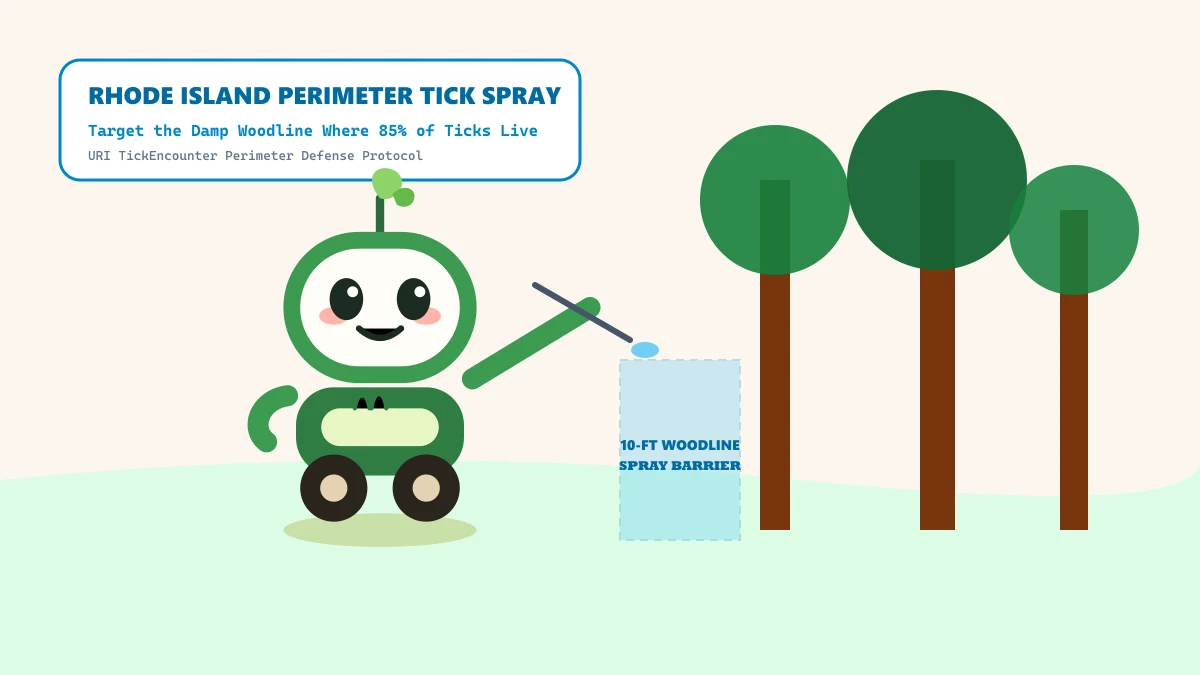
Rhode Island consistently ranks among the top states nationwide for reported cases of Lyme disease, Babesiosis, and Anaplasmosis per capita. For families with children and outdoor pets in towns like South Kingstown, Exeter, East Greenwich, Warwick, and Coventry, managing blacklegged deer ticks (Ixodes scapularis) is a non-negotiable part of enjoying your yard.
However, many homeowners waste money having pest companies blanket-spray their entire open sunny lawn.
Extensive research from the University of Rhode Island (URI) TickEncounter Resource Center shows that ticks rarely survive in direct sunlight on short, manicured turfgrass. Instead, successful tick control relies on targeted perimeter treatments applied where ticks actually live and quest.
The 10-Foot Perimeter Rule: Where Ticks Actually Hide
Deer ticks are extremely vulnerable to moisture loss (desiccation). They cannot regulate their internal water balance in dry, sunny air.
- Over 82% of ticks in residential yards are found within the first 10 feet of the shaded perimeter.
- Prime harborages include damp leaf litter beneath stone walls, shaded pachysandra or ivy groundcover, ornamental shrub borders, and the boundary line where your lawn meets the woods, where installing a wood chip tick buffer zone blocks migration.
- Open, sunny turfgrass cut to 3 inches holds less than 2% of the local tick population.
Professional tick control crews do not waste chemicals drenching the middle of your green lawn. Instead, they use commercial mist-blowers to lay down a dense, targeted barrier along the outer perimeter, stone walls, and brush edges.
Synthetic Bifenthrin vs. Organic Cedarwood Oil
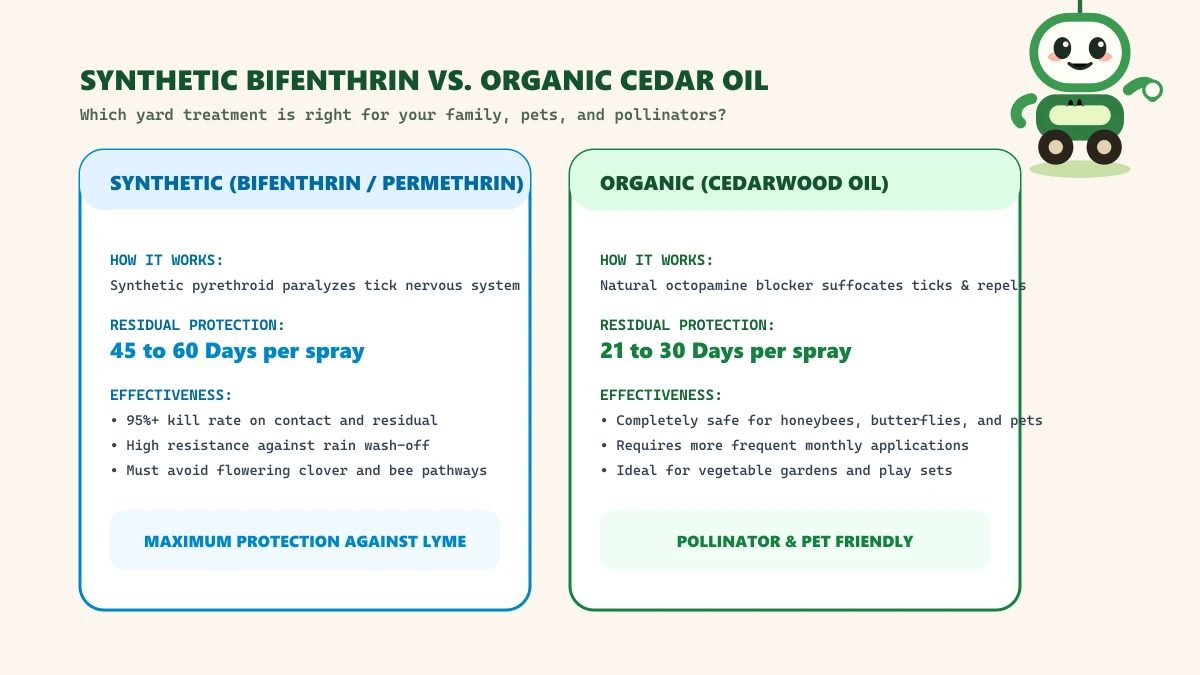
Rhode Island homeowners typically choose between two primary treatment chemistries:
1. Synthetic Pyrethroids (Bifenthrin / Permethrin)
- How It Works: Synthetic duplicates of natural pyrethrins derived from chrysanthemum flowers. They act as a contact neurotoxin that paralyzes and eliminates ticks.
- Residual Life: Binds tightly to organic matter and waxy plant leaves, providing 45 to 60 days of residual kill power even through moderate New England rain.
- Pros: Offers the highest kill rate (95%+), making it the gold standard for heavily wooded properties with active deer trails.
- Environmental Safeguards: Licensed Rhode Island applicators avoid flowering plants, clover patches, and vegetable gardens to prevent harm to honeybees and other beneficial pollinators.
2. Organic Cedarwood Oil & Essential Oils
- How It Works: Cedar oil blocks the octopamine neurotransmitter receptors found in ticks, mites, and mosquitoes without affecting mammals, birds, or beneficial pollinators.
- Residual Life: Breaks down naturally under UV sunlight and rain after 21 to 30 days.
- Pros: 100% natural and exempt under EPA 25(b) minimum-risk regulations. You and your pets can safely re-enter the lawn immediately after application.
- Cons: Requires more frequent monthly applications throughout the summer season to maintain consistent repellent pressure.
The 3-Stage Rhode Island Application Calendar
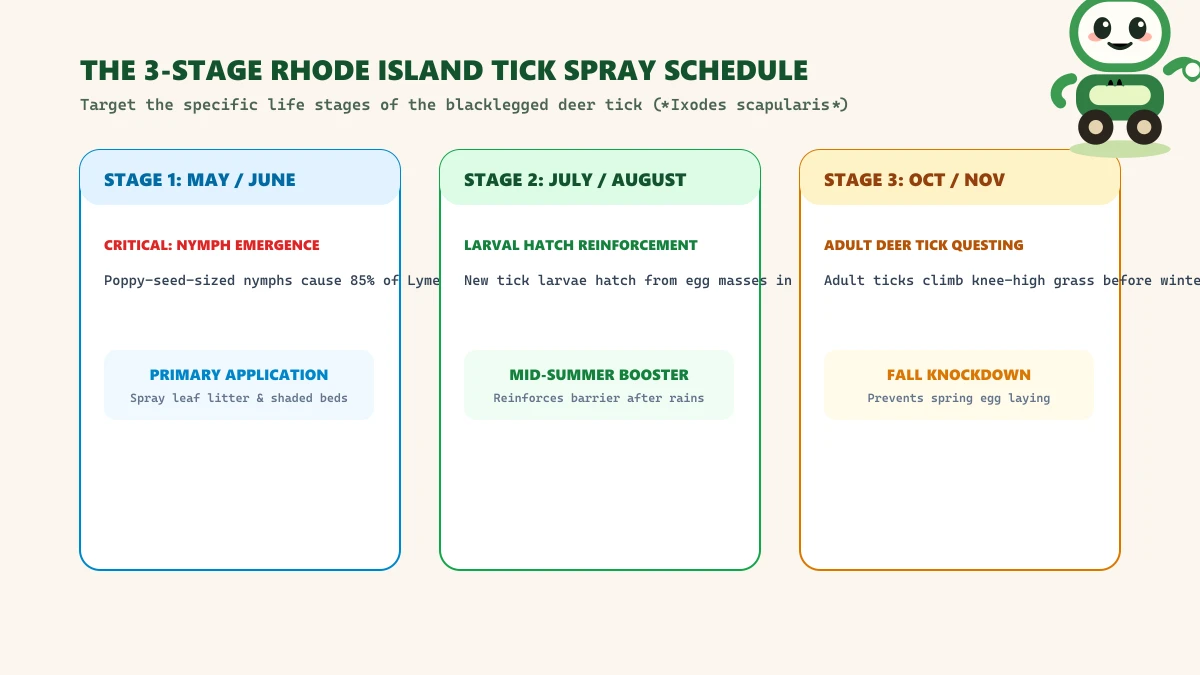
A single spray in mid-summer will not protect your yard. An effective program aligns with the 2-year life cycle of the blacklegged tick:
Stage 1: Mid-May to Early June (Nymph Season — Most Critical)
- The Threat: Poppy-seed-sized tick nymphs emerge from winter leaf litter left unraked from autumn fall cleanups. Because they are tiny and their bite is painless, nymphs are responsible for over 85% of human Lyme disease transmissions.
- Action: First perimeter spray targets ground moisture zones and shrub boundaries just as outdoor patio season begins.
Stage 2: July to Early August (Larval Hatch Surge)
- The Threat: Thousands of tiny tick larvae hatch from egg clusters in shaded tall grass and rodent nesting sites.
- Action: Mid-summer booster reinforces the perimeter barrier, knocking down new larvae before they latch onto chipmunks or mice to contract the Lyme bacterium.
Stage 3: October to Mid-November (Adult Deer Tick Questing)
- The Threat: Adult ticks become aggressive as autumn temperatures drop into the 40s and 50s. They climb to the tips of knee-high vegetation (questing) along yard perimeters to latch onto whitetail deer for their final blood meal.
- Action: Late fall spray prevents adult females from breeding and depositing up to 3,000 eggs along your property line over winter.
Typical Costs for Yard Tick Spraying in Rhode Island
Pricing depends on property acreage and perimeter linear footage:
- Single Perimeter Visit (Quarter to Half-Acre Lot): $75 to $135 per treatment.
- Full Season 3-to-4 Visit Package (Synthetic): $250 to $420 per season.
- Organic Cedarwood Monthly Package (5 Visits): $375 to $550 per season.
Many Rhode Island homeowners bundle tick and mosquito perimeter spraying with their regular seasonal lawn mowing or spring cleanup service, saving 15% to 20% on travel charges.
Keep your yard safe for family and pets this season
Don't let ticks keep you inside. Tell My Green Robot your property details and preferred treatment type (synthetic or organic), and we will match you with vetted local lawn and pest crews to protect your property perimeter.