
Blog
Best Grass Seed Mixes for Rhode Island: Coastal Salt Spray vs Inland Shade
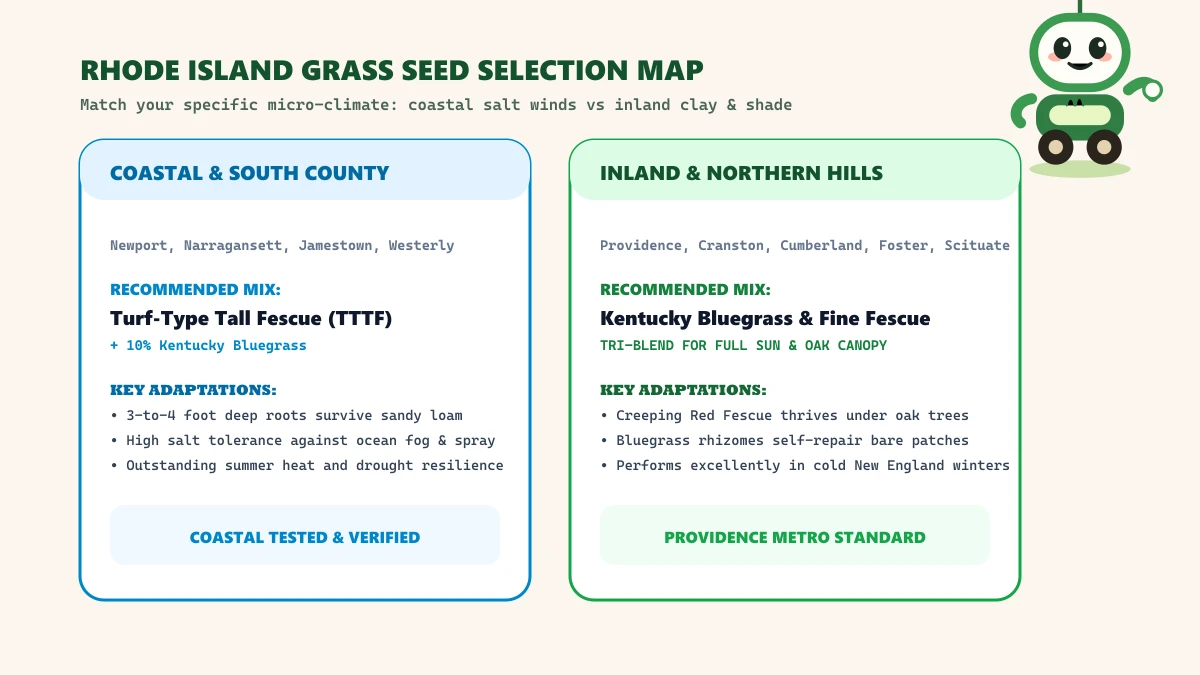
Walking down the lawn care aisle at a big-box store in Warwick or Seekonk, you will see dozens of national grass seed blends promising a dark green golf-course lawn in seven days. However, Rhode Island's harsh coastal weather and distinct microclimates quickly weed out generic Southern seed blends.
Rhode Island is small, but its growing conditions vary dramatically across just 30 miles. A seed mix that thrives in the heavy oak canopy and inland clay of Foster or Scituate will wither and burn when planted in the sandy, salt-misted soil of Narragansett Pier or Newport's Ocean Drive.
Here is how to choose the right grass seed mix for your specific Rhode Island property based on soil type, sunlight, and coastal exposure.
Rhode Island's Two Distinct Turf Ecosytems
Because of Narragansett Bay and the Atlantic Ocean, Rhode Island divides into two primary turf ecosystems:
1. Coastal Rhode Island & South County
- Towns: Newport, Middletown, Portsmouth, Jamestown, Narragansett, South Kingstown, Charlestown, Westerly, Little Compton.
- Environmental Challenges: Constant salt-laden maritime fog, high winter wind exposure, sandy topsoils (see our coastal lawn care guide) with rapid drainage, and intense summer sun.
- The Winning Turf: Turf-Type Tall Fescue (TTTF) blended with 10% Kentucky Bluegrass.

Modern Turf-Type Tall Fescue varieties are nothing like the coarse pasture grass of 30 years ago. Today's cultivars have narrow, deep-green blades that rival Kentucky bluegrass in aesthetic beauty while offering three massive advantages for coastal Rhode Island:
- Deep Root System: TTTF roots plunge 3 to 4 feet deep into coastal sandy loam, seeking subsoil moisture weeks after shallow bluegrass has gone brown in July.
- Salt Air Tolerance: Tall fescue tolerates airborne salt spray and brackish groundwater better than any other cool-season turf.
- Low Fertilizer Appetite: Requires 40% less nitrogen than Kentucky bluegrass, helping homeowners adhere to local coastal watershed runoff protections.
2. Inland Metro & Northern Hills
- Towns: Providence, Cranston, Pawtucket, Johnston, Cumberland, Smithfield, Foster, Glocester.
- Environmental Challenges: Dense mature hardwood shade (red oak, sugar maple), acidic glacial till clay soil (often needing a balancing lawn lime application), and freezing winter temperatures.
- The Winning Turf: Tri-Blend of Kentucky Bluegrass, Fine Fescue, and Perennial Ryegrass.
- Kentucky Bluegrass (KBG): The king of sunny lawns. Bluegrass spreads via underground runners called rhizomes. If children or pets tear up a patch of grass in spring, bluegrass naturally knits itself back together without requiring reseeding.
- Fine Fescue (Chewings, Hard, and Creeping Red): The essential ingredient for homes shaded by mature New England oak trees. Fine fescue survives on as little as 3 to 4 hours of filtered sunlight daily and thrives in slightly acidic soil (pH 5.8 to 6.5).
- Perennial Ryegrass: Added at 10% to 15% for rapid 5-to-7 day nurse-crop germination, stabilizing the soil while slower bluegrass establishes roots.
The Seed Tag: What to Look for Before Buying
Before purchasing a bag of seed, flip it over and read the legally mandated analysis tag:
- Aim for 0.0% Weed Seed and 0.0% Other Crop: Low-grade national contractor mixes frequently contain 0.1% to 0.3% weed seeds. In a 20-pound bag, that equates to introducing over 20,000 dormant poa annua, orchardgrass, or chickweed seeds directly into your yard.
- Check the Germination Rate: Look for tested germination rates of 85% or higher with a test date within the last 9 months.
- Avoid Annual Ryegrass: Cheap seed mixes use annual ryegrass as a filler because it sprouts in three days. However, annual ryegrass dies completely at the first hard winter frost, leaving your lawn bare the following spring.
When to Seed in Rhode Island: Timing Is Everything
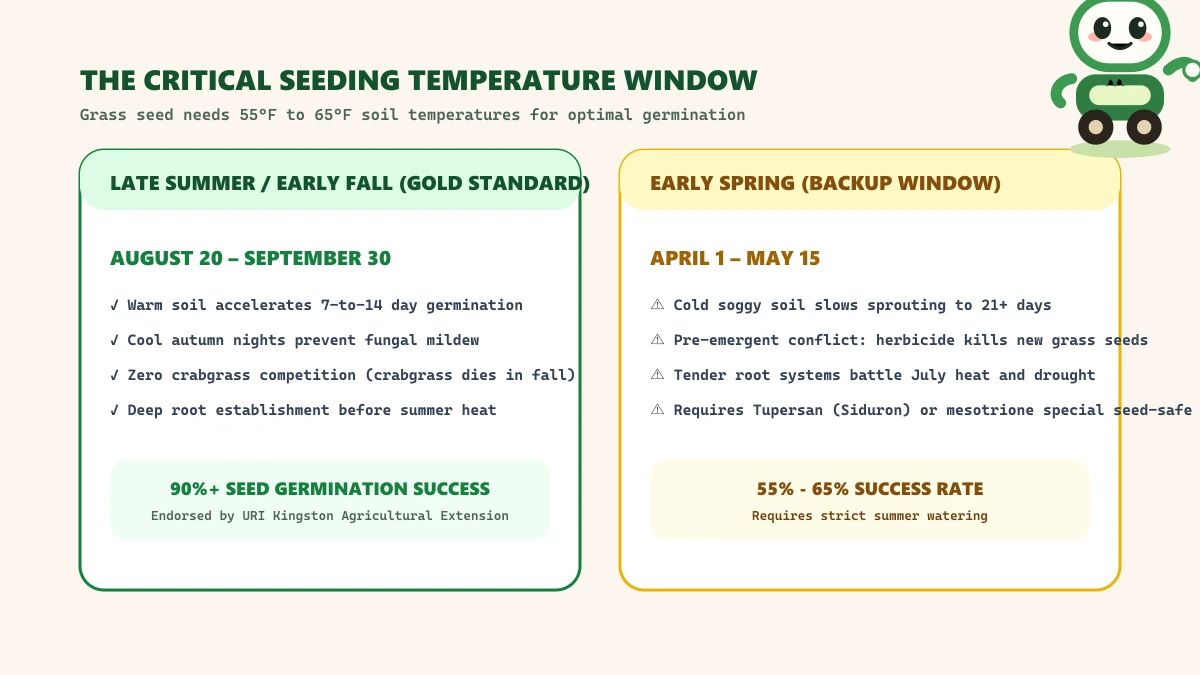
Agronomists at the University of Rhode Island (URI) Kingston Agricultural Extension consistently recommend late summer to early autumn (August 20 to September 30) as the ideal seeding window.
- Why Fall Seeding Succeeds: Soil temperatures hover around 65°F to 70°F, prompting rapid 7-to-12 day germination. Cool autumn night temperatures prevent fungal blight, and weed competition drops to zero as crabgrass dies off.
- The Trouble with Spring Seeding: In April, Rhode Island soil is cold and waterlogged. Furthermore, standard crabgrass pre-emergent herbicides kill new lawn seedlings. If you must seed in spring, you must use specialized seed-safe pre-emergents containing Siduron (Tupersan) or Mesotrione.
Ready to renovate or overseed your lawn?
Whether you combine core aeration vs dethatching for seed-to-soil contact on the coast or slice seed under shaded inland oaks, local Rhode Island landscape crews have the commercial equipment to ensure seed-to-soil contact. Tell the robot your property details to get transparent, written quotes.